Activity choices3 min read
An illuminated slope does not mean the entire daytime resort remains available after dark. Treat an evening ski session as a separate service window with its own ticket, instruction, equipment and return arrangements. The useful planning exercise is to connect those services before deciding that a longer operating day automatically creates a suitable evening for your group.
Read the guide ↗
Learning conversations3 min read
A useful adaptive-sport inquiry starts with the person’s interests and preferred communication, then gives the provider the information needed to discuss its actual service. Keep the participant’s voice central instead of letting a companion’s assumptions become the booking brief. The aim is a clear service conversation, not remote medical clearance or a promise about equipment suitability.
Read the guide ↗
Activity choices3 min read
Cross-country skiing can appear to be one booking category even when the provider distinguishes classic and skating instruction. Identify the lesson you are actually arranging before reserving related equipment or assuming that alpine experience transfers. A clear discipline-and-service record helps the school and rental team coordinate without turning a travel article into technique instruction.
Read the guide ↗
Learning conversations3 min read
A pre-holiday indoor session can be useful even when it does not produce a dramatic new skill label. Treat it as a chance to ask an instructor about the coming trip, observe the practical demands of a lesson and identify unresolved arrangements. The result should be a clearer conversation with the destination school, not a certificate of mountain readiness.
Read the guide ↗
Learning conversations3 min read
A language preference on a booking form is useful only when the participant and provider understand what it means in practice. Explain which language you can follow comfortably during instruction and ask how the school handles that request. The aim is clear communication throughout the session, without treating a translation app or a bilingual companion as an automatic substitute for the agreed teaching arrangement.
Read the guide ↗
Learning conversations3 min read
A remembered ability level can survive much longer than the experience it describes. When returning after a long gap, give the school a factual history instead of selecting the most flattering label from an earlier holiday. The useful outcome is suitable placement now, with room for qualified assessment and no obligation to recreate a past version of yourself.
Read the guide ↗
Access and records3 min read
Seeing ski tracks on a resort slope does not establish permission to walk or skin uphill there. Some operators publish specific uphill programs with their own status and limits. For a recreational visitor, the first useful decision is whether the proposed activity is authorized at all, before considering equipment, fitness or a route seen in somebody else’s photograph.
Read the guide ↗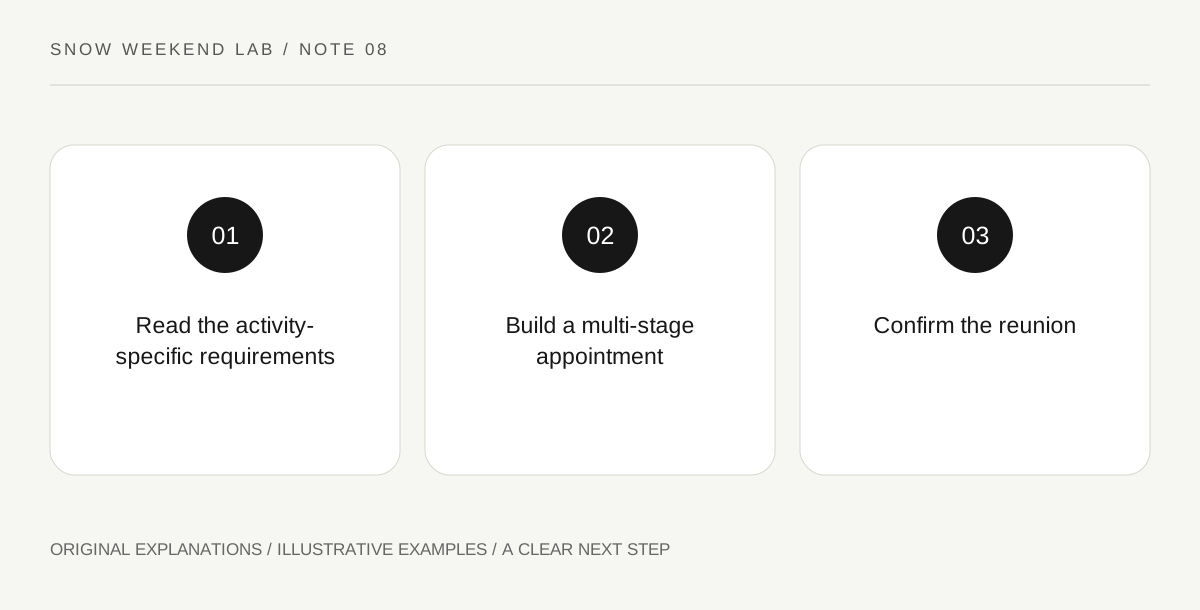
Activity choices3 min read
A tubing booking may involve a mountain journey, participant requirements and more than one meeting point before the activity begins. Do not borrow a ski lesson’s assumptions simply because both appear on the same resort website. Treat the confirmation as its own appointment and connect its requirements with the actual people joining.
Read the guide ↗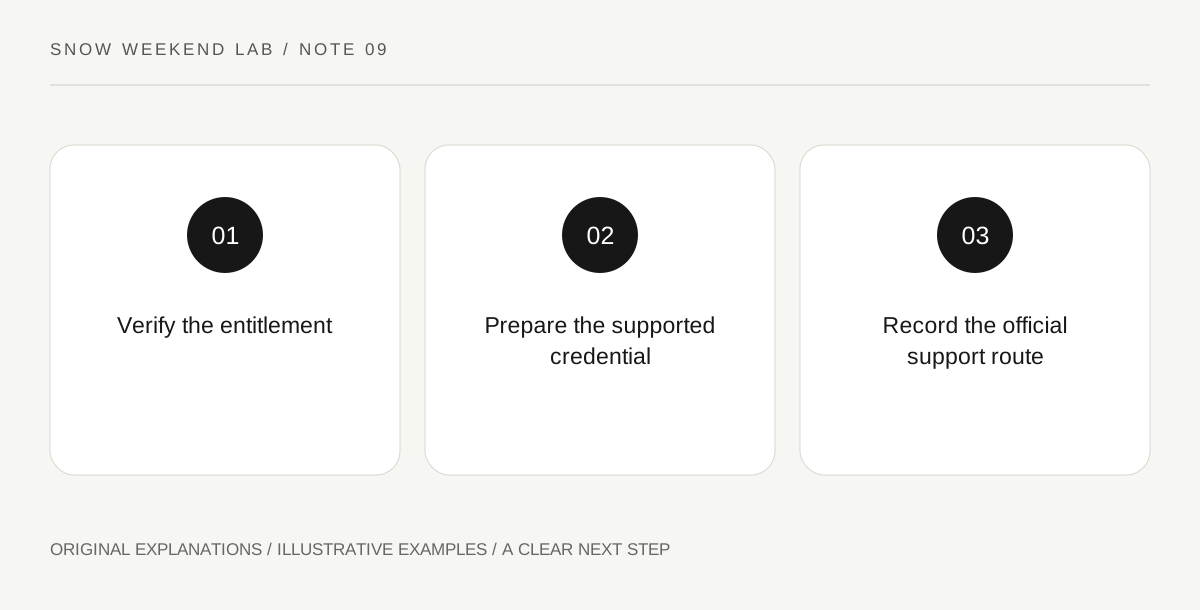
Access and records3 min read
Buying access and presenting it at a reader are related but different tasks. A mobile ski pass makes that distinction especially useful: the purchased entitlement belongs in your account, while the operator’s supported credential and setup process govern presentation. Prepare both sides before the queue, with guest services as the route for an unresolved problem.
Read the guide ↗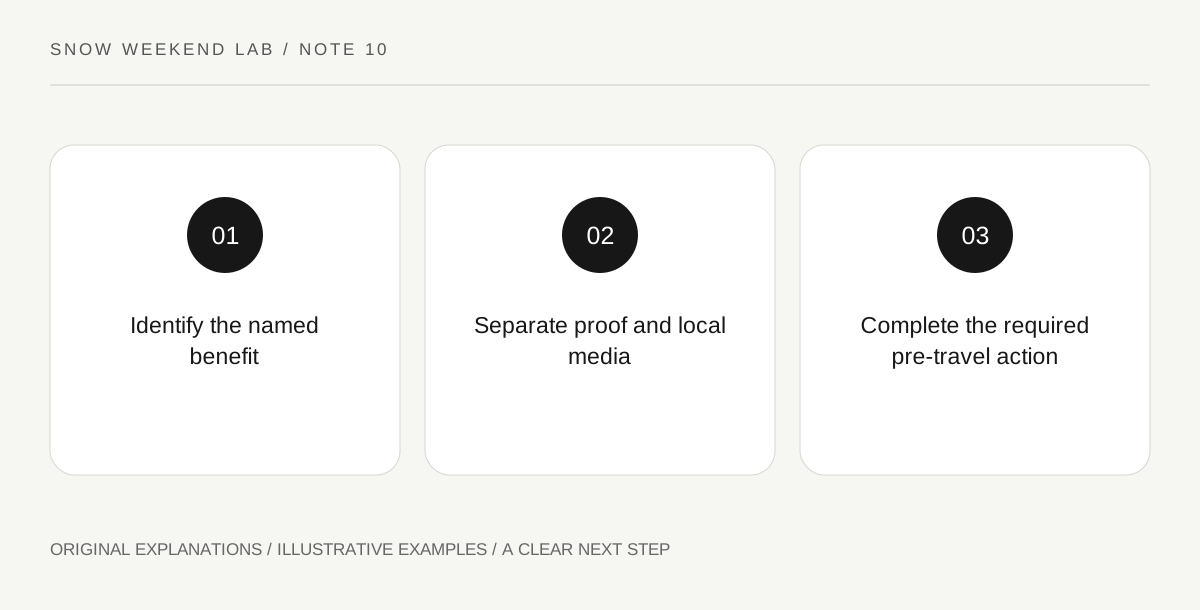
Access and records3 min read
A multi-resort pass can create an access benefit without making its home-resort credential the local gate medium everywhere. Before a partner visit, identify what establishes eligibility and what the partner issues or accepts for actual entry. This small distinction can resolve a practical problem that a broad list of included mountains does not explain.
Read the guide ↗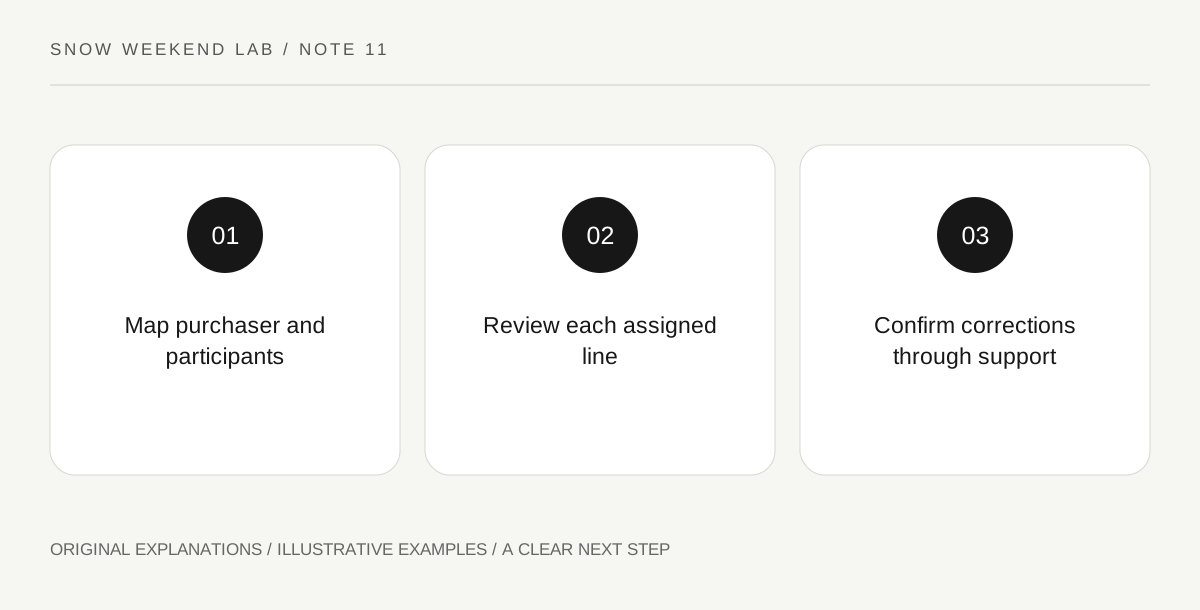
Access and records3 min read
A parent, partner or trip organizer may pay for a booking without being the person who uses it. Keep those roles separate when purchasing ski access or related services. A compact participant record helps identify mistakes before arrival, while leaving identity correction and transfer questions to the operator rather than treating a receipt as permission to swap users.
Read the guide ↗
Access and records3 min read
Losing a pass creates several different tasks: checking a plausible lost-property route, notifying the operator and establishing its accepted replacement process. Keep those tasks distinct so searching does not become an excuse to delay a required report or improvise access. A calm record helps guest services answer the actual problem without exposing account details publicly.
Read the guide ↗
Learning conversations3 min read
Experience in one snow sport can make a new discipline feel familiar before the equipment is fitted, but familiarity is not a placement assessment. When trying skis after snowboarding or the reverse, tell the school exactly which experience belongs to which activity. The result should be a coherent first lesson in the new discipline, not pressure to skip support because you already enjoy snow.
Read the guide ↗
Access and records3 min read
An age boundary can affect which lesson product a provider offers even when a family thinks of the holiday as one continuous week. If a participant has a birthday near the trip, ask which date the school uses for its category and which practical arrangements follow. Keep the answer product-specific rather than inventing a universal rule for every resort.
Read the guide ↗
Between sessions3 min read
A meal plan is easier when a venue receives a clear description of the requirement rather than a broad request for something healthy or special. For a ski day, resolve the food-service question before it becomes entangled with a limited break. Keep personal care decisions separate from the venue’s actual information about its menu and preparation.
Read the guide ↗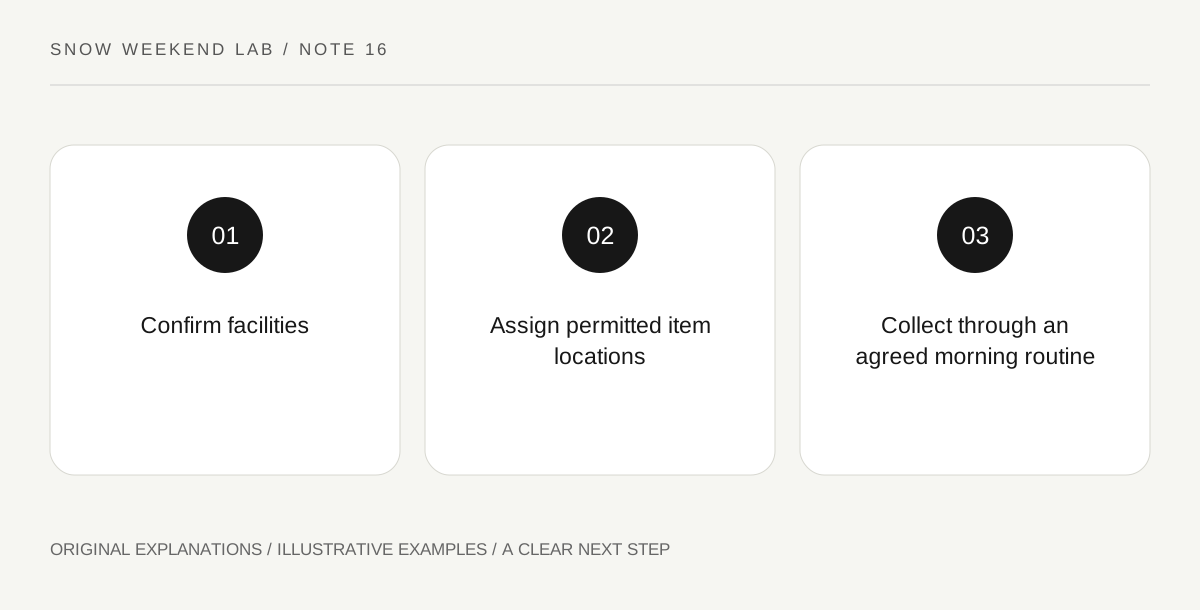
Between sessions3 min read
The end of a snow session brings equipment and clothing into a shared accommodation space. A useful room routine begins with what the property provides and what the manufacturers allow, then assigns a place for each person’s belongings. It is an organization task, with no need to improvise a heating method or turn a bedroom into an unapproved drying area.
Read the guide ↗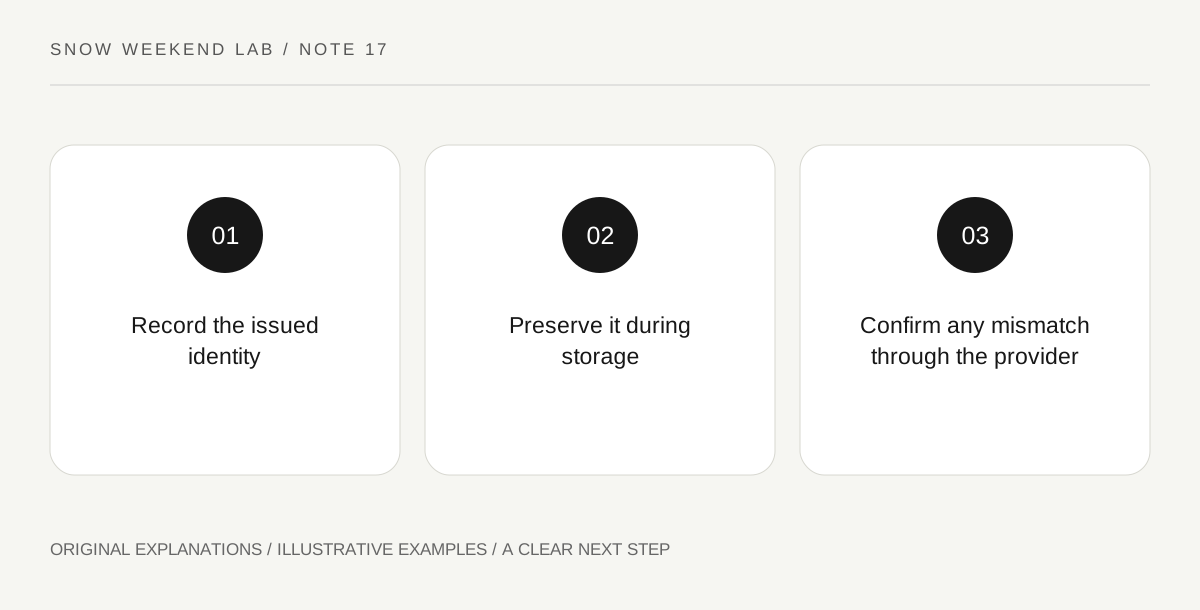
Between sessions3 min read
Several pairs of similar-looking rental skis or boots can become hard to distinguish in a shared storage area. Preserve the rental team’s assignment rather than relying on color, shoe size or a companion’s memory. A small identity record helps the group collect the right items and routes any uncertainty back to the responsible professionals.
Read the guide ↗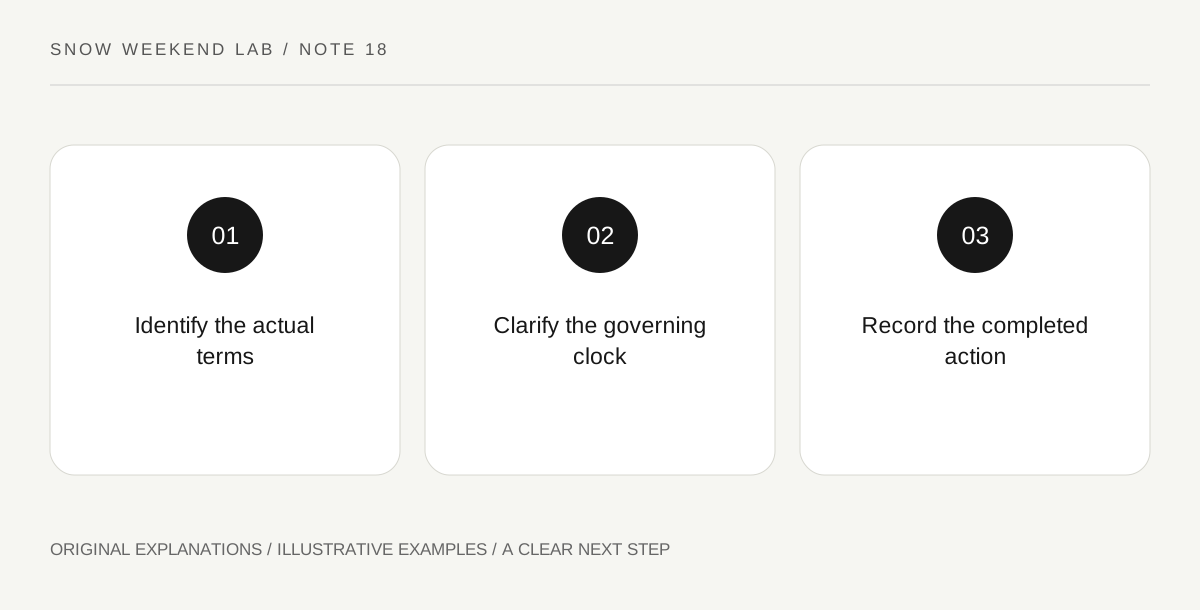
Access and records3 min read
A cancellation rule can be understood in words yet still be misread on a travel day because of time zones, start times or separate products. Turn the actual rule into a dated private reminder, retaining the operator’s wording and confirmation route. The worksheet helps you ask an accurate question; it does not invent refund rights or replace the booking terms.
Read the guide ↗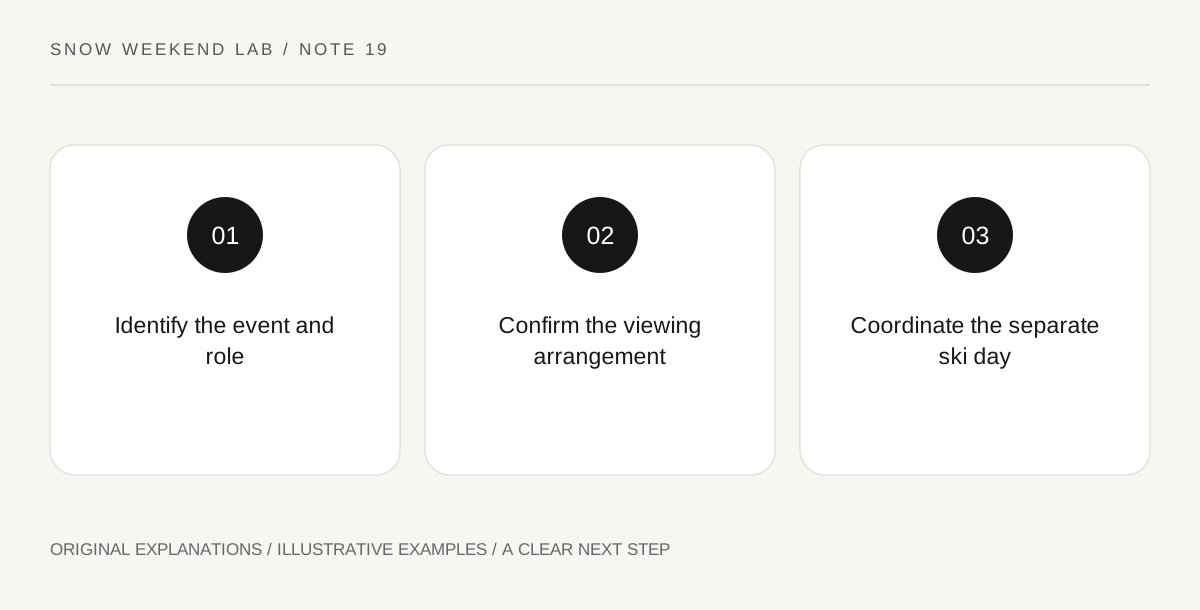
Activity choices3 min read
A resort event can sit inside a wider operating day without giving spectators and skiers the same access. Before planning a visit around a race or rail jam, identify what you want to watch and how the organizer expects spectators to reach it. Keep that arrangement separate from your own skiing plans and any participant-only area.
Read the guide ↗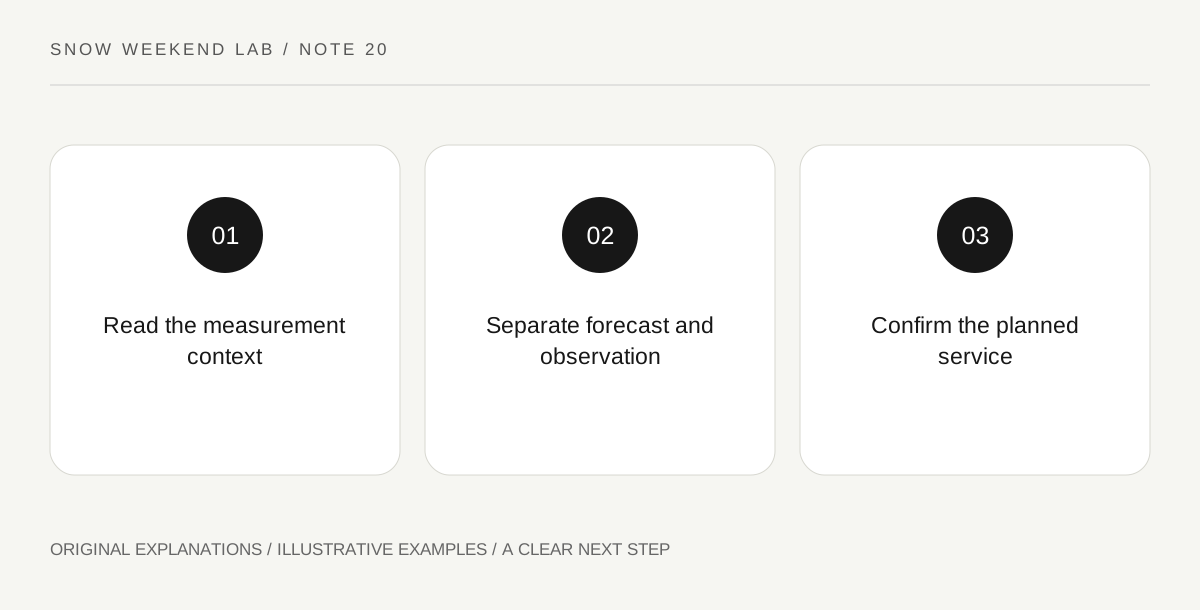
Access and records3 min read
A large snowfall number can dominate attention while answering a much narrower question than whether your planned activity is operating. Read the report’s labels, measurement interval and update time before using the figure. A simple field card keeps snow observations, forecasts and current service status from collapsing into one encouraging but unsupported conclusion.
Read the guide ↗