Similar rental equipment in a shared chalet: preserve who received which item
Several pairs of similar-looking rental skis or boots can become hard to distinguish in a shared storage area. Preserve the rental team’s assignment rather than relying on color, shoe size or a companion’s memory. A small identity record helps the group collect the right items and routes any uncertainty back to the responsible professionals.
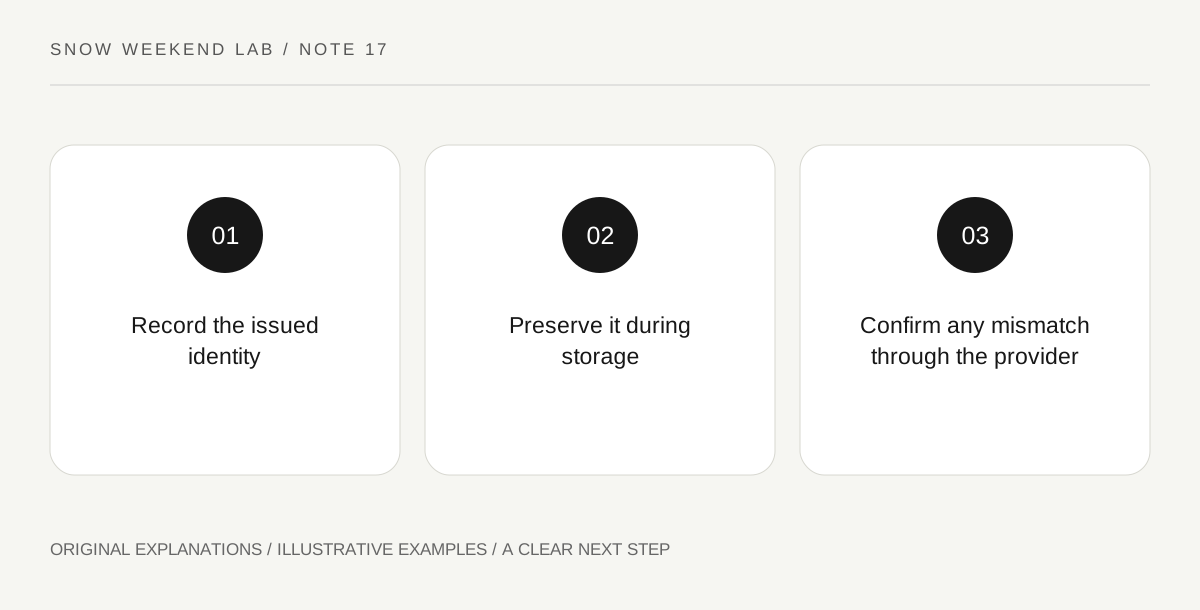
Original explanatory diagram. Read the full method and limitations below.
Keep the issued assignment visible
The resort’s rental terms treat gear as a booked and issued service selected with participant information. Use the rental provider’s actual handover process to understand which item belongs with which participant. Ask how its identifiers should be read and whether an approved temporary label is allowed. Do not make your own technical interpretation of numbers or assume that visually similar equipment is interchangeable. The record is about preserving the assignment made by the provider, not selecting or configuring equipment yourself.
Use an item map with minimal personal information
Create a private list linking each participant’s chosen display name with the provider-approved identifier or description. If a photograph is useful and permitted, keep it focused on the relevant identifying feature rather than collecting unnecessary personal documents. A shared chalet board can use simple initials if that is sufficient for the group. The aim is a practical morning collection aid. It should not become a public inventory of account details or an excuse to attach something that interferes with equipment function.
Treat a mismatch as a stop-and-ask question
If an item no longer matches the record, keep the uncertainty explicit and contact the rental team through its normal support route. Do not test another person’s setup, alter bindings or exchange items because the dimensions appear similar. A visual identity problem is not solved by assuming compatibility. Tell the provider what is known: which participant, which issued identifier and what seems different now. That concise report makes it easier to resolve the issue than a series of unsupervised swaps that destroys the original assignment trail.
Include return day in the same system
Before equipment is returned, use the list to check that the group is bringing the assigned items to the provider’s stated return point. Let staff complete its actual return process and retain the confirmation it supplies. A chalet checklist is not a substitute for that handover. If something is missing, report it rather than treating another similar item as an acceptable replacement. The same identity discipline supports collection, storage and return without asking travelers to become equipment technicians.
Illustrative planning example
Illustrative record: three friends receive similar-looking rental items. At handover they ask the shop how to recognize the assignments and keep a private approved identifier list. The next morning one item does not match. They ask the shop to resolve it before use instead of exchanging setups within the group. At return, the list helps bring the assigned items back while the provider completes the actual check-in.
Questions that come up
Can two people swap rentals if their shoe sizes match?
Do not assume that is appropriate. Participant assignment and equipment suitability need the rental provider’s involvement; a familiar size label is not a compatibility assessment.
Does a private checklist prove the equipment was returned?
No. It helps organize belongings. The provider’s actual return and confirmation process establishes the handover under its terms.
References and scope
These sources support the factual background. Examples and exercises are original illustrative teaching material. References do not imply endorsement.
- Whistler Blackcomb: Policies, rental terms — The participant-linked rental service and provider process; no equipment compatibility or adjustment instruction.