Food requirements on a ski day: send the venue a usable question
A meal plan is easier when a venue receives a clear description of the requirement rather than a broad request for something healthy or special. For a ski day, resolve the food-service question before it becomes entangled with a limited break. Keep personal care decisions separate from the venue’s actual information about its menu and preparation.
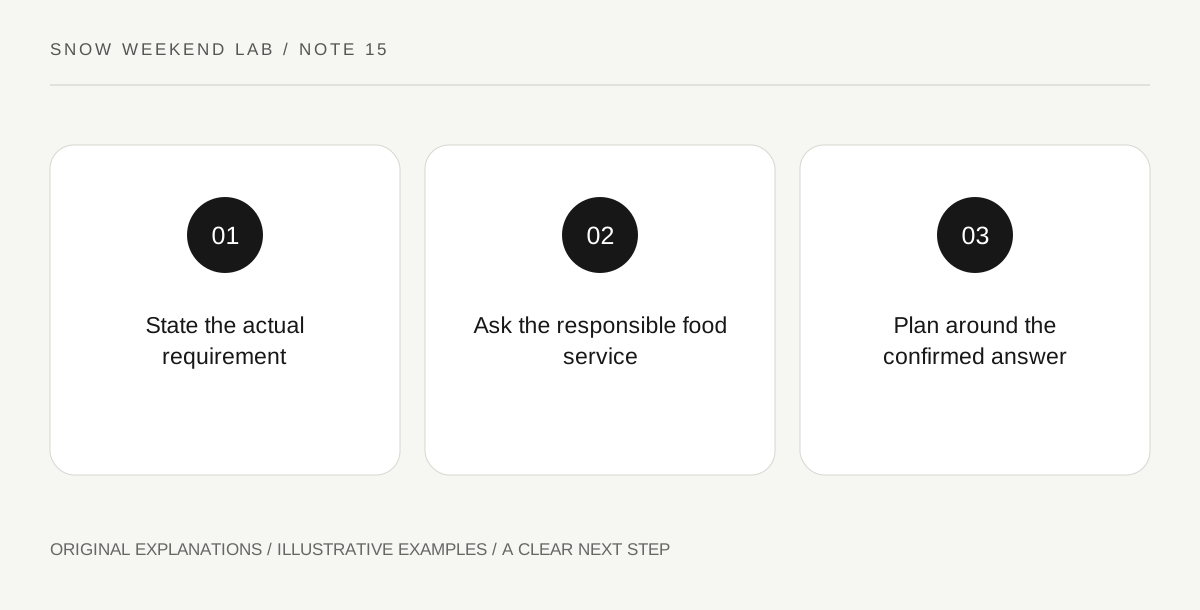
Original explanatory diagram. Read the full method and limitations below.
Name the requirement accurately
FDA’s food-allergy information emphasizes reading labels and knowing the relevant food concern. Use that as a reason to distinguish an allergy-related requirement from a preference or another dietary need when communicating with a venue. Do not ask a menu symbol or a companion to make a medical assessment. Follow the affected person’s established professional guidance for their care. The trip-planning task is narrower: state the actual requirement accurately and ask the food provider what information and service it can supply.
Ask about the specific service
Identify whether you are discussing a restaurant meal, a lesson-included meal or a packaged item. Those are different service contexts. Give the provider the date and product information it needs, and ask how ingredient and preparation questions are handled. A general resort dining page may not answer what a particular lesson meal contains. Keep the response connected to the actual service rather than assuming that an answer from one outlet applies everywhere under the same resort brand.
Leave enough time for an honest answer
Ask before committing the whole group to a venue that cannot yet answer the question. If the provider needs to consult another responsible person, give the inquiry that space rather than demanding reassurance from the first available staff member. An unresolved answer remains unresolved. Choose the meal arrangement according to the information actually available and the person’s own care requirements. Do not improvise a test bite or rely on a dish looking similar to one eaten safely elsewhere.
Make the group plan flexible
Once a suitable arrangement is established by the relevant people, record the practical details privately and keep companions informed only as needed for coordination. The whole group need not order identical meals to share time together. If the food plan changes, revisit the actual requirement rather than treating an earlier message as approval for a different dish or venue. End with a clear service question and a named response, while leaving health management with the person and appropriate professionals. A thoughtful ski-day meal plan supports the break without turning dining logistics into medical advice.
Illustrative planning example
Illustrative message: a participant has an established food-related care requirement and asks the lesson provider how its included meal is handled. The provider refers the inquiry to the responsible food-service team. Until the answer is clear, the organizer does not promise that a menu icon resolves it. The final group schedule leaves room for the participant’s confirmed arrangement without sharing unnecessary private health details.
Questions that come up
Does the same dish name mean the same composition at every outlet?
No. Use information about the actual product or service. A familiar name and appearance do not replace ingredient and preparation information.
Can this article determine which meal is medically suitable?
No. It organizes communication with the food provider. The person’s care decisions should follow their appropriate professional guidance and actual needs.
References and scope
These sources support the factual background. Examples and exercises are original illustrative teaching material. References do not imply endorsement.
- FDA: Food Allergies — What You Need to Know — Food-label awareness and accurate food-allergy information; no diagnosis, treatment or meal-safety guarantee.