Wet ski clothing at the accommodation: agree on the room routine first
The end of a snow session brings equipment and clothing into a shared accommodation space. A useful room routine begins with what the property provides and what the manufacturers allow, then assigns a place for each person’s belongings. It is an organization task, with no need to improvise a heating method or turn a bedroom into an unapproved drying area.
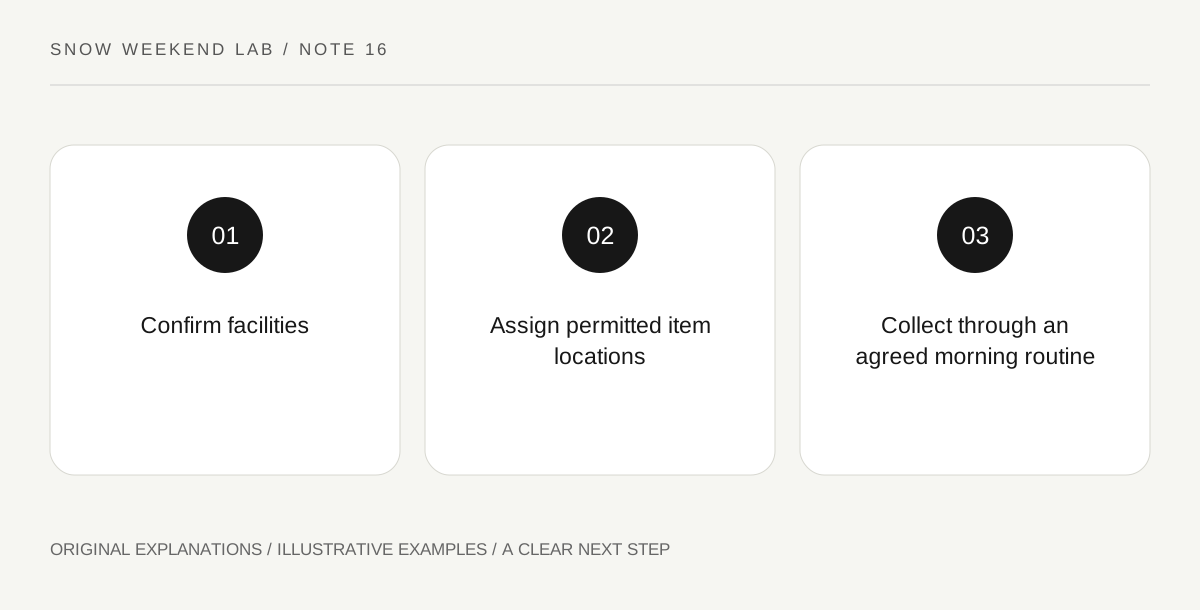
Original explanatory diagram. Read the full method and limitations below.
Read the actual facilities rather than a resort label
Official accommodation listings in Seefeld distinguish facilities such as a ski storeroom and a boot dryer. That illustrates why storage and drying should be read as specific features rather than assumed from the phrase ski hotel. Ask your actual property what is provided, who may use it and which operating instructions apply. A feature listed for one accommodation says nothing about another. Keep the reply with the lodging record so every companion follows the same arrangement instead of inventing a private solution after returning tired.
Separate property instructions from item care
The property controls its facilities, while the manufacturer or rental provider supplies relevant care information for the item. If those instructions are unclear or appear to conflict, ask the responsible provider before acting. Do not place gear on an improvised heat source, alter electrical equipment or assume that one item’s drying method suits every material. The practical worksheet needs only three fields: item, permitted location and responsible instruction. It does not need a universal temperature table or a home-made technical procedure.
Assign belongings without blocking the shared space
Choose a way for each person to recognize their own items within the permitted area. Use labels only where the property and equipment provider allow them. Keep entrances, circulation and shared facilities usable by others. A simple room map can show ordinary belongings, wet outerwear and items that must remain with a responsible adult. Do not assume that an available hook or radiator is permission to use it for any object. The plan should make the space easier to share, not merely move one person’s inconvenience into another person’s path.
Plan the morning collection as part of the routine
Agree who checks that belongings are collected and how a missing or still-wet item will be handled through the provider’s available support. Do not treat an early lesson as a reason to rush into an improvised solution. A short collection check can happen before the group separates for breakfast. End the routine with a clear handoff: each participant knows where their permitted items are and what care instruction applies. That is a practical improvement to the holiday without making unsupported claims about drying performance or material protection.
Illustrative planning example
Illustrative room map: two adults confirm that their property provides a designated storage room and ask about the posted facility instructions. Each keeps a private item list and uses an approved identification method. The morning plan includes collection before leaving for breakfast. An unfamiliar device is left unused until staff explains it, rather than treating its presence as permission to experiment with every item.
Questions that come up
Does a ski storeroom automatically include drying facilities?
No universal equivalence is established. Read the actual property features and ask what the named facility does.
Can I use the same heating method for every item?
Do not assume so. Follow the relevant manufacturer or rental guidance and property instructions, and ask when the permitted method is unclear.
References and scope
These sources support the factual background. Examples and exercises are original illustrative teaching material. References do not imply endorsement.
- Region Seefeld: Hotel Seelos official accommodation listing — The separate listing of ski-storage and boot-dryer facilities; no care procedure or recommendation of the property.