Switching from skis to a snowboard: describe experience in the correct discipline
Experience in one snow sport can make a new discipline feel familiar before the equipment is fitted, but familiarity is not a placement assessment. When trying skis after snowboarding or the reverse, tell the school exactly which experience belongs to which activity. The result should be a coherent first lesson in the new discipline, not pressure to skip support because you already enjoy snow.
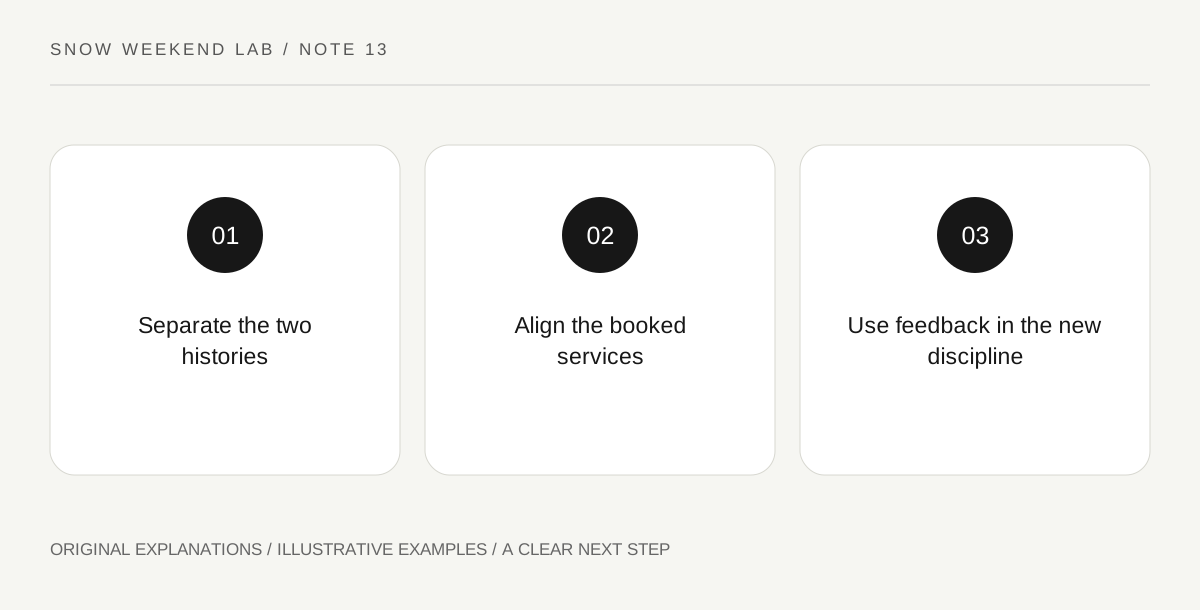
Original explanatory diagram. Read the full method and limitations below.
Use two separate experience headings
Whistler Blackcomb’s lesson information presents separate ski and snowboard ability descriptions and confirms placement through instructors. Follow that distinction in your inquiry. Under one heading, describe the discipline you know; under the other, state whether you have any actual experience with the one you are booking. Do not copy the familiar discipline’s level into the new field because both activities use lifts or occur on snow. The school can use the full history without having to undo an inaccurate current-level claim.
Ask which product is actually being booked
Check that lesson, rental and participant records all name the intended new discipline. A familiar account or earlier reservation may make it easy to select an old default without noticing. Review the final product rather than only the payment confirmation. If a package includes equipment, ask the provider how the relevant arrangement is made. Do not improvise equipment substitutions or settings. The practical aim is consistent service information, with the school and rental team understanding the same planned experience.
Keep peer comparisons out of the lesson plan
Companions may tell you that the switch should be easy or offer an informal shortcut based on their own experience. Acknowledge the encouragement without treating it as instruction or qualification. Use the provider’s process and let the instructor assess what happens next. You can arrange a shared meal or off-snow activity without requiring the group to share terrain immediately. That removes an unnecessary deadline from the learning experience and lets the new participant ask questions without feeling that everyone else is waiting for a promised result.
Record what transfers only through actual feedback
After the session, distinguish confidence from the instructor’s observed feedback. A familiar resort routine may feel easier while the new activity still requires basic instruction. Record the actual next step recommended in the new discipline rather than declaring that all previous skills have transferred. The switch becomes more enjoyable when it is treated as a real learning choice. It does not need to validate a general theory that one snow sport is easier, more fashionable or more natural for everyone.
Illustrative planning example
Illustrative inquiry: a snowboarder books an introductory ski lesson and states their snowboarding history separately from having no ski instruction. They review the rental and lesson lines to ensure both say skiing. Friends plan a meeting that does not depend on a shared descent. The instructor’s current feedback determines the next ski session, while the participant’s earlier snowboard experience remains useful background rather than a copied ability rating.
Questions that come up
Does confidence on snow establish the new discipline’s ability level?
No. Confidence is relevant background but does not replace assessment in the activity you are actually learning.
Must I decide which sport is universally easier before trying one?
No. Choose according to interest and available appropriate instruction. A personal learning decision does not require a universal ranking of the disciplines.
References and scope
These sources support the factual background. Examples and exercises are original illustrative teaching material. References do not imply endorsement.
- Whistler Blackcomb: Ski & Snowboard Lessons — Separate ski and snowboard ability descriptions and instructor-confirmed placement; no assumed skill transfer.