An adaptive snow session: let the participant lead the intake conversation
A useful adaptive-sport inquiry starts with the person’s interests and preferred communication, then gives the provider the information needed to discuss its actual service. Keep the participant’s voice central instead of letting a companion’s assumptions become the booking brief. The aim is a clear service conversation, not remote medical clearance or a promise about equipment suitability.
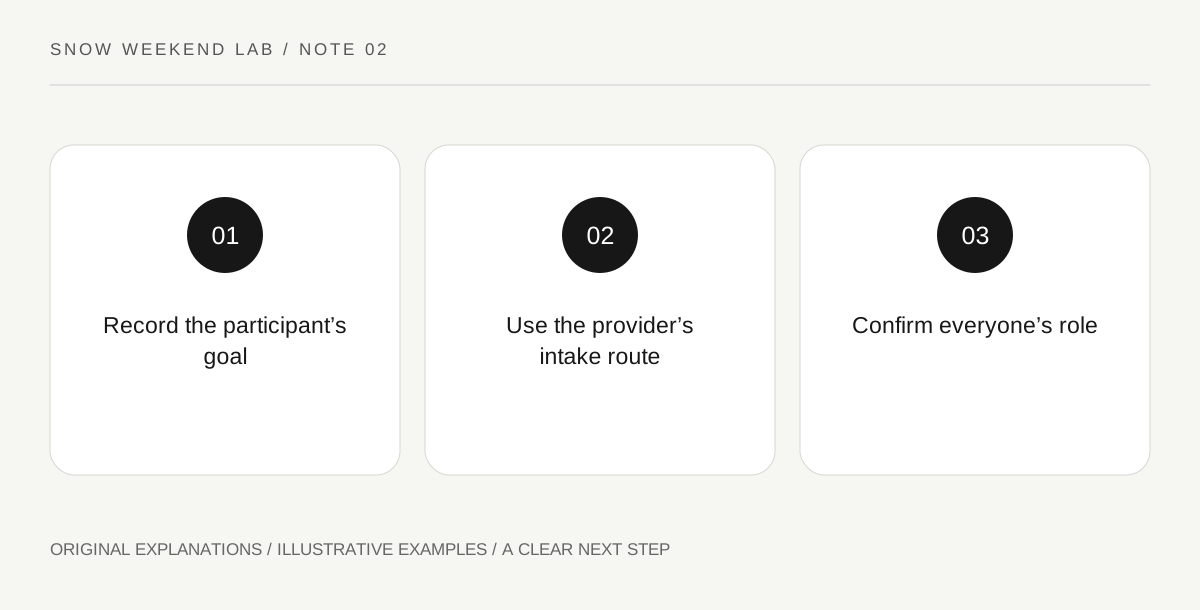
Original explanatory diagram. Read the full method and limitations below.
Begin with the desired experience
Whistler Adaptive describes inclusive, participant-centered sport programs and offers alpine and Nordic activities within its wider program. That shows why adaptive should lead to a conversation about the particular activity, not one generic booking label. Ask the participant what they want from the session: an introduction, a return to a familiar activity or another clearly expressed goal. Use their own words where possible. A companion can help organize the inquiry while keeping the person’s preferences distinct from suggestions made on their behalf.
Describe support needs concretely
Ask the provider which intake information it needs and how that information should be shared privately. Describe relevant communication, access and assistance needs in practical terms rather than assuming that a diagnostic label answers every service question. Do not post medical or identifying details in a public trip discussion. A concise inquiry might explain a preferred communication method and ask how an equipment discussion is arranged. The provider can then identify the appropriate next step without being asked to make a suitability decision from an incomplete message.
Separate participant, companion and instructor roles
Write down who will take part, who will accompany them and what the provider expects each person to do. A family member’s presence should not be assumed to replace trained instruction or an agreed assistance role. Ask about the actual meeting point, transfer arrangements and any briefing needed for companions. This role map can reveal a practical gap, such as assuming that a companion may join an activity without confirming access. Resolving that gap preserves the participant’s experience instead of making the day depend on unspoken improvisation.
Keep confirmation specific and revisable
A program’s general inclusion statement is not a guarantee that every activity, date or equipment configuration is available. Keep the provider’s actual reply with the booking, including unresolved questions and the next contact. If the participant’s needs or plans change, contact the provider rather than treating an earlier discussion as a permanent approval. Finish by checking that the participant understands and agrees with the practical arrangement. A successful intake produces a shared understanding of the proposed session, with professional assessment left to the responsible people.
Illustrative planning example
Illustrative inquiry: an adult participant wants an introductory snow experience and prefers written information before a call. Their companion helps draft a brief email in the participant’s own terms, asks how intake is handled and separates the companion’s hoped-for role from the participant’s session. The provider’s response becomes the next-step record; no equipment configuration or medical suitability is inferred from the program’s general website.
Questions that come up
Does a named disability determine one appropriate piece of equipment?
A general article cannot make that assessment. Let the provider request relevant information and arrange its own qualified discussion of the actual participant and session.
Can a companion handle the inquiry?
They can help with the participant’s agreement, while preserving the person’s preferences and involvement. Make clear which statements come from the participant and which are questions from the companion.
References and scope
These sources support the factual background. Examples and exercises are original illustrative teaching material. References do not imply endorsement.
- Whistler Adaptive Sports Program — Its inclusive participant-centered programs and alpine/Nordic activity context; no individual eligibility or medical clearance.